
Who are the barristers chambers with the highest pupillage awards?
Friday 29th August 2025
Tela has conducted research to identify the barristers chambers with the highest pupillage awards in 2025.
In addition, Tela analysed the pupillage pages of these chambers, highlighting trends and differences in how they promote their pupillage and mini-pupillage opportunities.
This data has been gathered from trusted sources including Chambers and Partners, Legal Cheek, Legal 500, The Lawyer and Law.com.
Please note, this is a research piece and not all websites referenced were designed or developed by Tela.
Barristers Chambers with the highest Pupillage Awards
| Chamber | Notes / specialism |
|---|---|
| Gough Square Chambers | Leading commercial & chancery |
| Gray’s Inn Tax Chambers | Specialist tax set |
| Blackstone Chambers | Public law, commercial, international law |
| Crown Office Chambers | Public law, criminal, government advisory |
| Fountain Court Chambers | Commercial & financial crime |
| 4 New Square Chambers | Commercial chancery |
| Atkin Chambers | Commercial, chancery |
| Gatehouse Chambers | Commercial, chancery |
| Henderson Chambers | Commercial, chancery |
| Keating Chambers | Construction, professional negligence |
| Serle Court | Commercial chancery |
| Wilberforce Chambers | Commercial chancery |
| XXIV Old Buildings | Commercial chancery |
| 2 Temple Gardens (2TG) | Specialist commercial |
| 3VB | Commercial and crime |
| 4 Pump Court | Commercial chancery |
| 4 Stone Buildings | Commercial chancery |
| 7KBW | Commercial, public law |
| Brick Court Chambers | Commercial, EU/Competition |
| Erskine Chambers | Commercial chancery |
| Essex Court Chambers | Commercial, fraud, international arbitration |
| Hailsham Chambers | Commercial chancery |
| New Square Chambers | Commercial chancery |
| Outer Temple Chambers | Employment, equality law |
| Radcliffe Chambers | Charity law |
| South Square | Insolvency, chancery |
| Tanfield Chambers | Commercial chancery |
| Twenty Essex | Public international law |
| One Essex Court | Commercial disputes |
| Old Square Chambers | Employment and commercial law |
| Doughty Street Chambers | Human rights, public law |
| Red Lion Chambers | Criminal, regulatory |
| St Philips Chambers | Regulatory, financial crime |
| Garden Court Chambers | Public law, employment, civil liberties |
| Monckton Chambers | Competition, regulatory, EU law |
| Cornerstone Barristers | Public law, planning, environment |
Analysis of the barristers chambers pupillage pages
Tela examined the pupillage pages across various barristers chambers’ websites. This analysis reveals how different chambers showcase their opportunities, the level of detail provided and the overall user experience for prospective applicants.
Gough Square Chambers
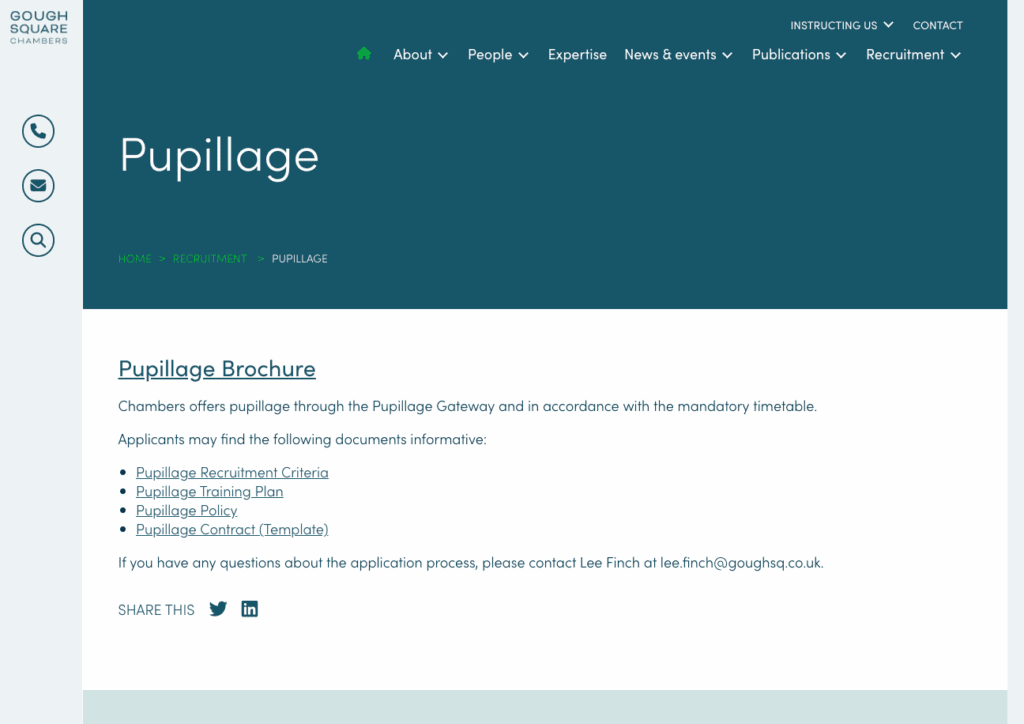
Gough Square Chambers’ pupillage page provides a clear, well-structured overview of the application process, aligned with the Pupillage Gateway timetable. It offers easy access to key documents like the Recruitment Criteria, Training Plan and Contract, ensuring transparency for applicants.
Gray’s Inn Tax Chambers
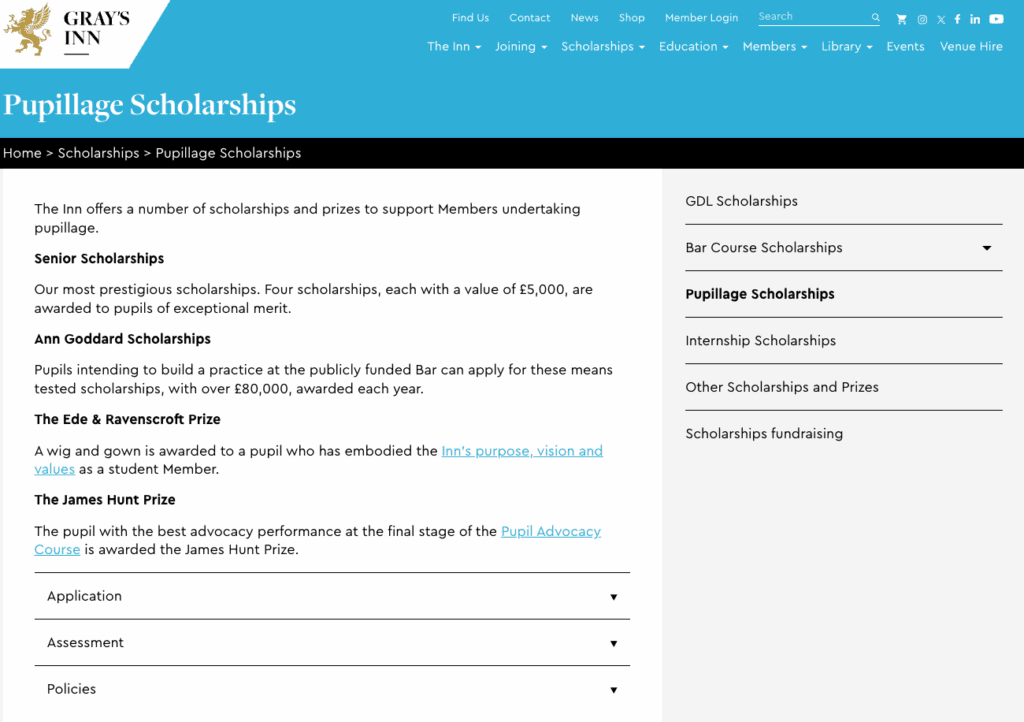
Gray’s Inn Tax Chambers’ pupillage page clearly outlines the application process and selection criteria, aligned with the Pupillage Gateway timetable. It details the pupillage structure and provides information on funded and unfunded mini-pupillages.
Blackstone Chambers
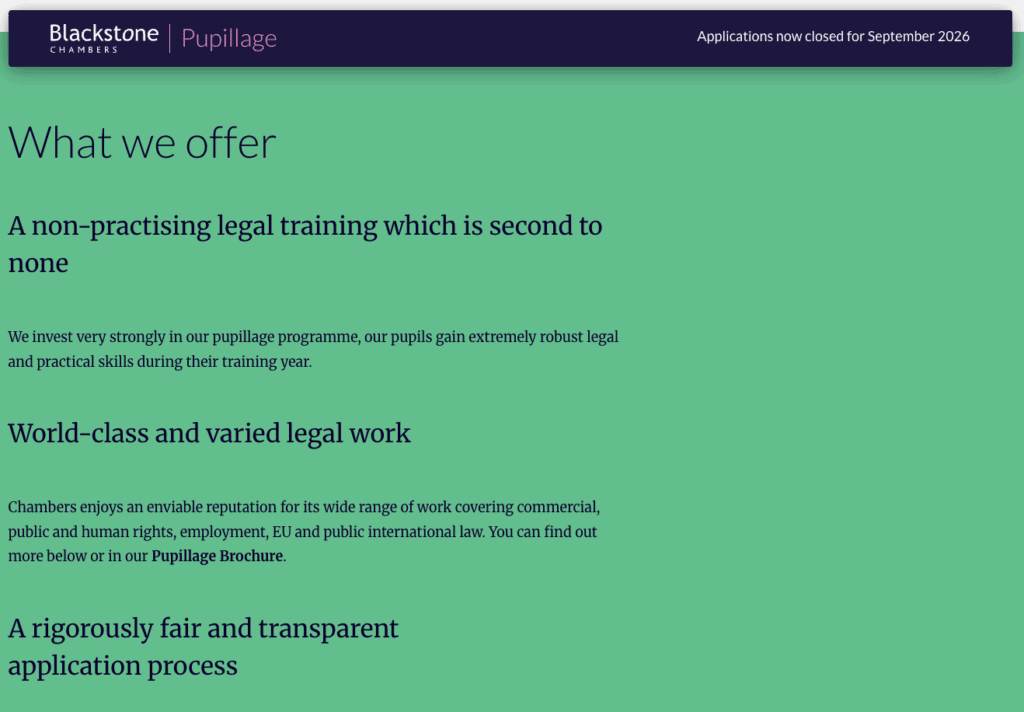
Blackstone Chambers’ pupillage website offers a clear, well-structured overview of the application process, aligned with the Pupillage Gateway timetable. It outlines each stage in detail, including anonymised applications, a written assessment, assessed mini-pupillages and final interviews. The site provides transparent selection criteria, a comprehensive training plan and clear information on funding, including a £90,000 award. Applicants benefit from detailed guidance documents, a robust Q&A section and access to inclusion initiatives and recorded webinars, making the site both informative and accessible.
Crown Office Chambers
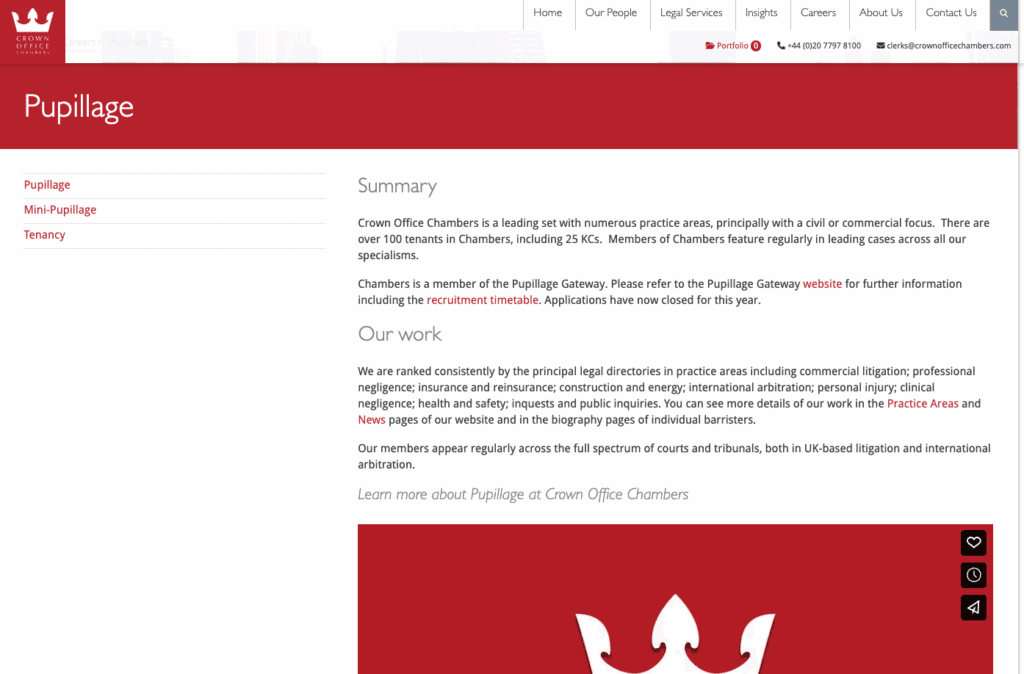
Crown Office Chambers’ pupillage webpage is clearly laid out and easy to navigate, offering detailed information aligned with the Pupillage Gateway timetable. It provides transparency through sections on funding, structure and selection criteria, alongside downloadable documents and guidance. The site also includes information on mini-pupillages, with clear application details and available financial support, making it a practical and informative resource for prospective applicants.
Fountain Court Chambers
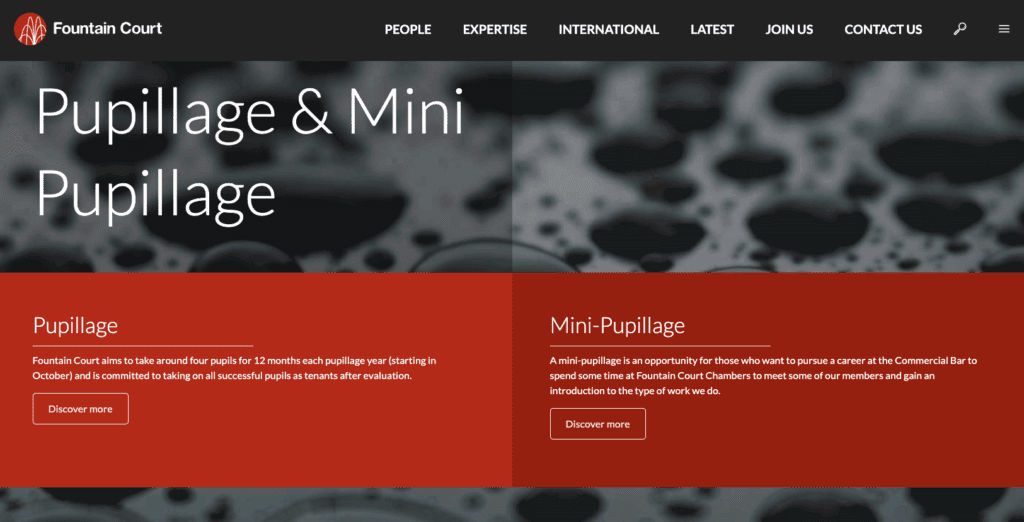
Fountain Court’s webpage presents a clean, well-organised layout divided into Pupillage and Mini‑Pupillage sections, each offering clear gateways to further information. The Pupillage section summarises the number of available places (around four per year), tenancy prospects and a link to FAQs covering key details on the programme and award. The Mini‑Pupillage section explains the required two‑day visit, gives application deadlines and links to the online application system and describes how selection criteria are applied fairly. Throughout, contact details for enquiries are provided and each section links to deeper pages on diversity and equal opportunities, making it user‑friendly and resource‑rich.
4 New Square Chambers
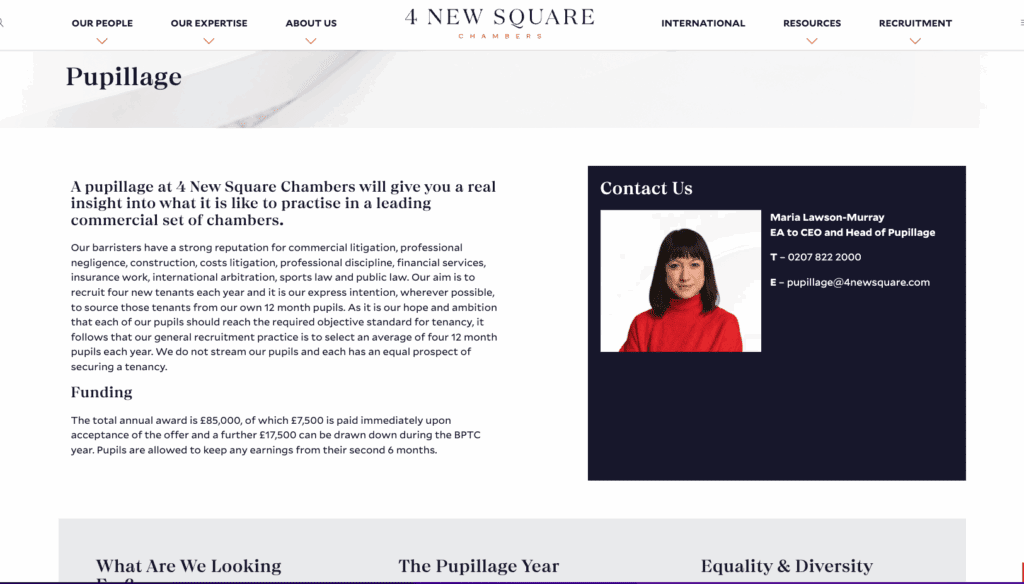
4 New Square Chambers’ pupillage webpage is clearly structured, with dedicated sections on selection criteria, application via the Pupillage Gateway and funding. It provides access to key documents, outlines the number of pupillages offered and links to information on mini-pupillage and diversity, making it a user-friendly and informative resource for applicants.
Atkin Chambers
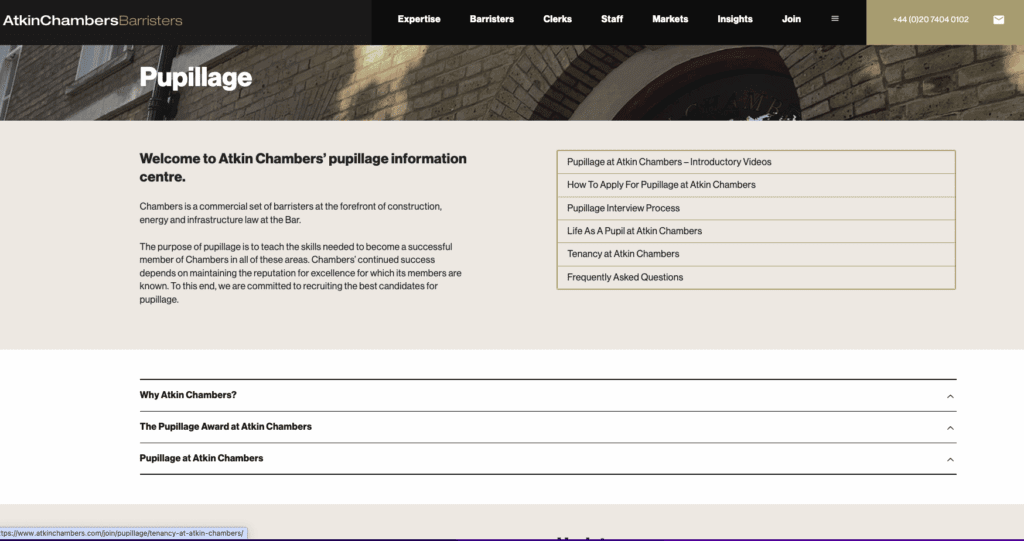
Atkin Chambers’ pupillage webpage is clearly structured and informative, aligning with the Pupillage Gateway timetable. It details the application process, including the requirement for a CV and cover letter submitted directly to the chambers and outlines the two-round interview process. The page provides information on the £85,000 annual pupillage award, with up to £25,000 available for Bar Training Course funding. It also highlights the chambers’ commitment to recruiting tenants from their own pupils and offers links to introductory videos, FAQs and contact details for further inquiries.
Gatehouse Chambers
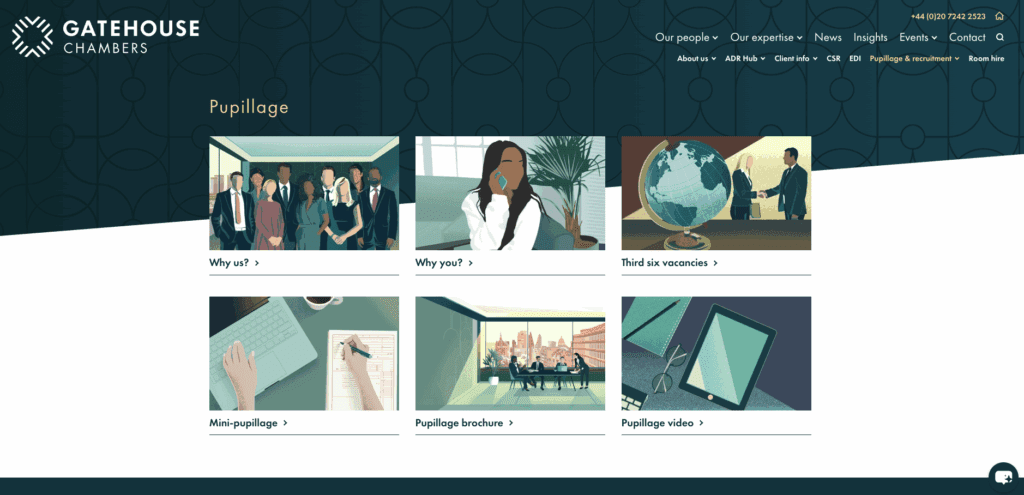
Gatehouse Chambers’ pupillage webpage is well-organised and user-friendly, providing clear navigation to sections such as “Why Us?”, “Why You?”, “Mini-Pupillage” and “Third Six Vacancies”. Each section offers concise information on the pupillage programme, application process and selection criteria. The page includes links to the pupillage brochure, video and details on equality, diversity and inclusion initiatives. Additionally, it features a link to the mini-pupillage page, outlining the application process and selection criteria. The layout is clean, with intuitive navigation, making it easy for prospective applicants to access relevant information.
Henderson Chambers
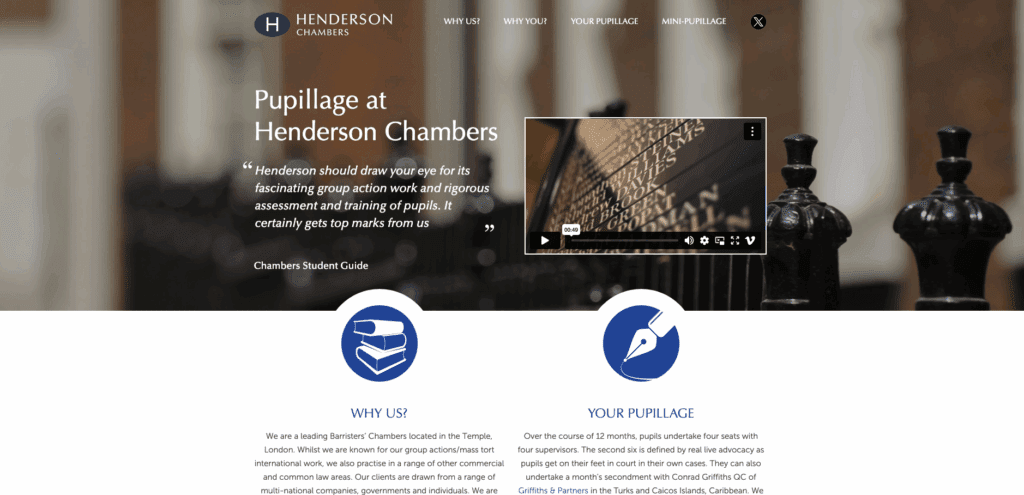
Henderson Chambers does not have a dedicated pupillage page on their main website; instead, they host pupillage information on a separate site: https://www.hendersonpupillage.co.uk/. This site provides an overview of their pupillage programme, including application details, funding and training. The site is structured under the headings “Why Us?”, “Why You?”, “Your Pupillage” and “Mini-Pupillage.” It also features video content to give further insight into pupillage at Henderson Chambers.
Keating Chambers
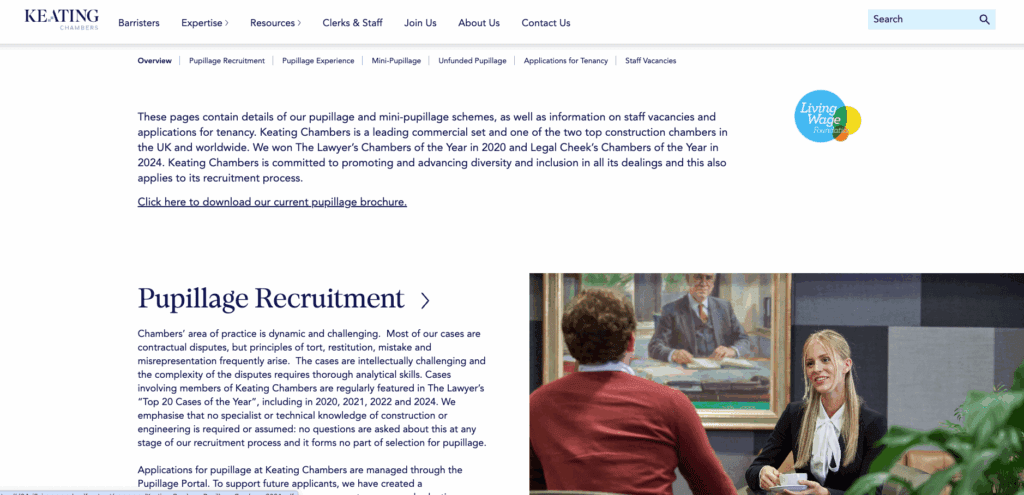
Keating Chambers’ pupillage page provides a clear overview of the application process, funding and training offered. It includes detailed information about the pupillage structure, selection criteria and timelines, alongside contact details for queries and information about other recruitment opportunities within chambers.
Serle Court
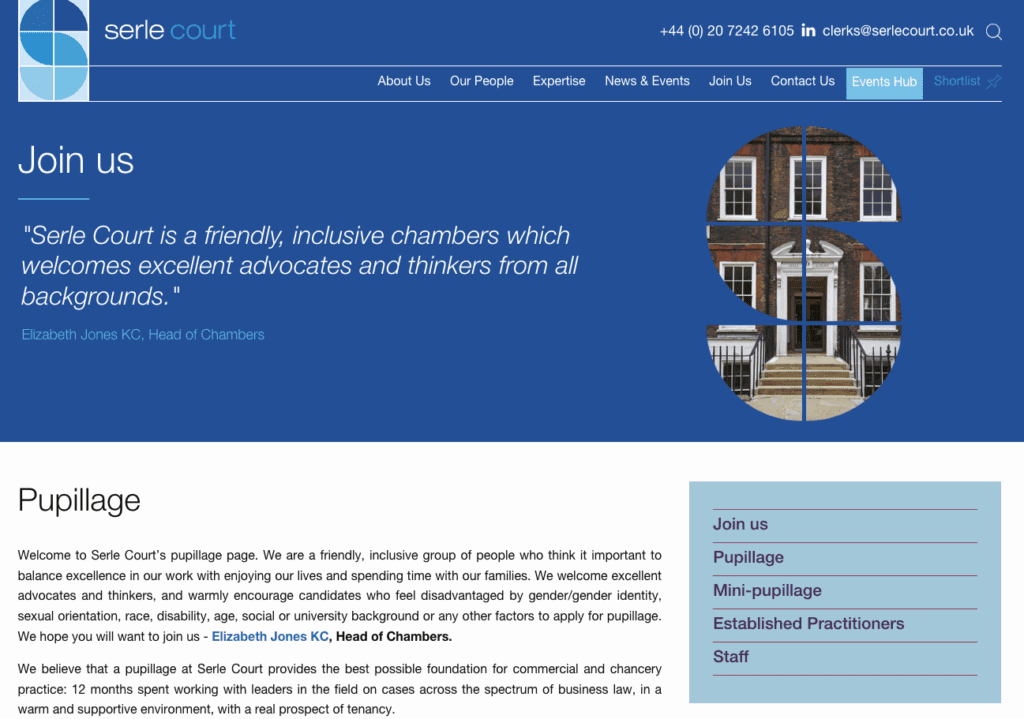
Serle Court’s pupillage page provides a clear overview of their 12-month programme, detailing the pupillage structure, supervisory setup and advocacy training. It highlights the supportive, collaborative environment and includes a message from the Head of Chambers encouraging diverse applications. The page also links to the full Pupillage Policy for further details.
Wilberforce Chambers
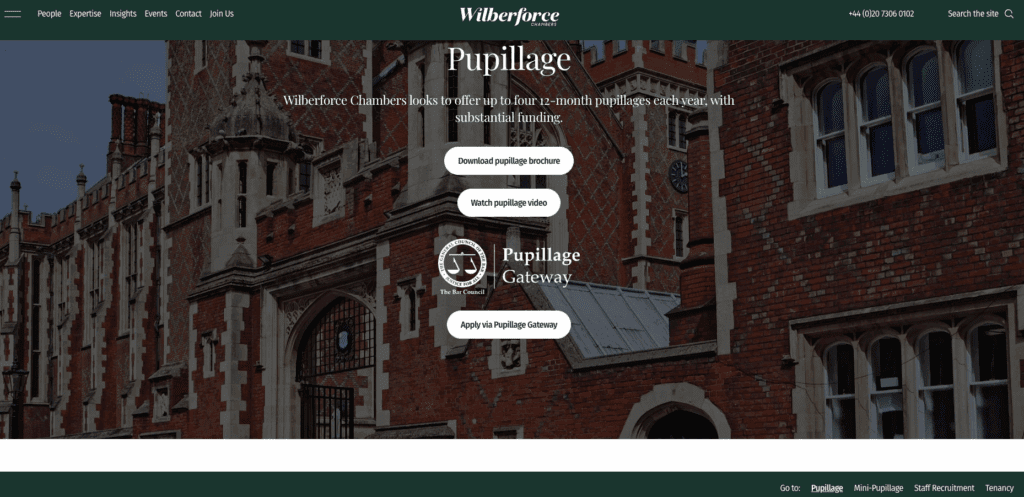
Wilberforce Chambers’ pupillage page clearly outlines their 12-month programme, application process via the Pupillage Gateway and £75,000 funding package. It highlights their focus on intellectual ability and commercial law interest, the supportive non-competitive environment and provides links to a brochure and video for more details.
XXIV Old Buildings
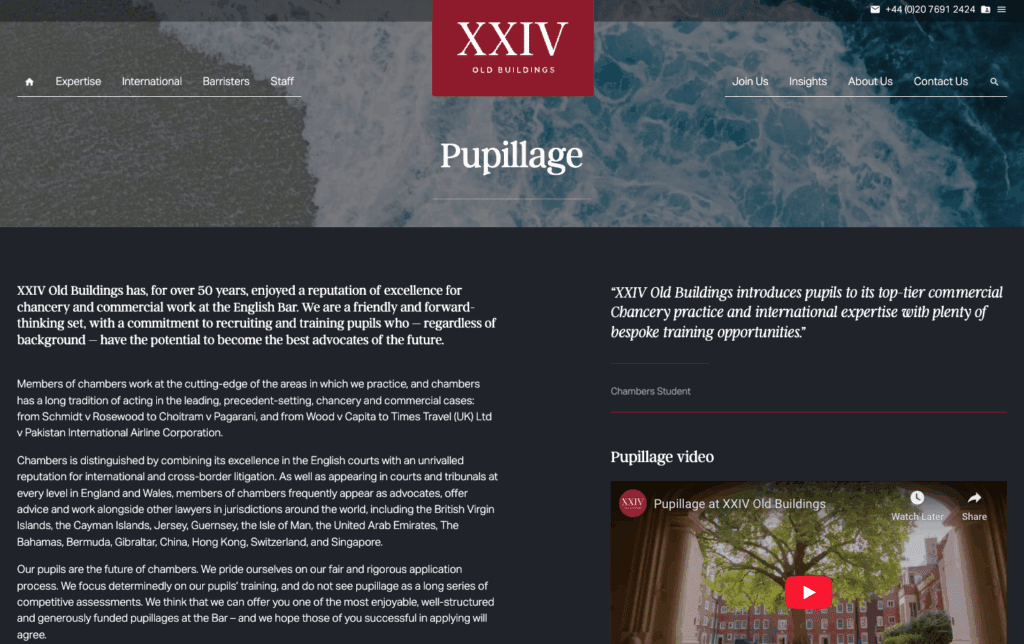
XXIV Old Buildings’ pupillage page provides a clear overview of their programme, emphasising a supportive, non-competitive training environment. The page includes detailed sections on the application process, funding and life as a pupil, along with testimonials from members highlighting the chambers’ collegial culture. It also offers links to mini-pupillage opportunities, diversity and inclusion initiatives, frequently asked questions and relevant downloadable documents.
2 Temple Gardens (2TG)
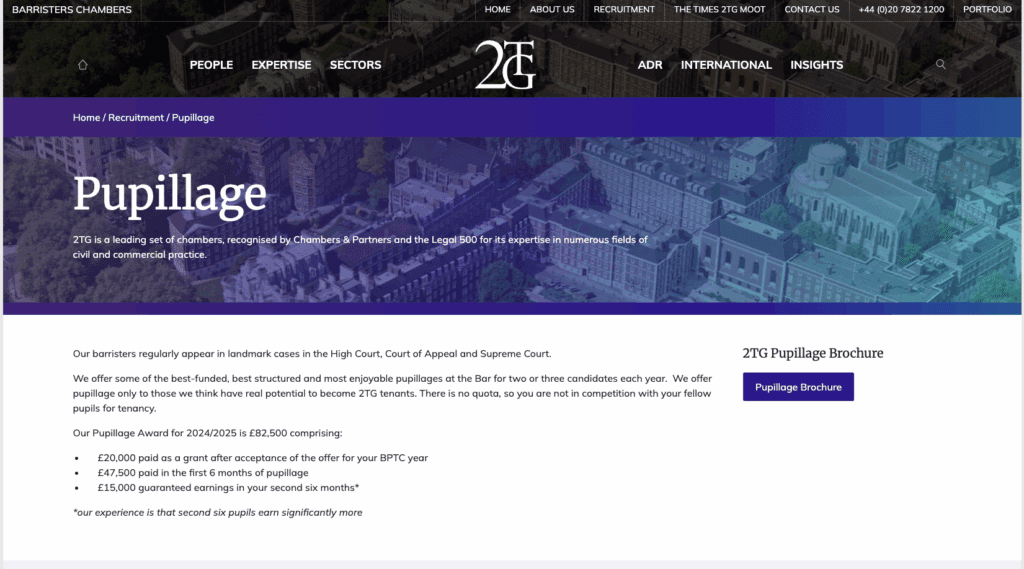
2 Temple Gardens’ pupillage page offers a clear overview of the application process, funding and pupillage structure. It highlights advocacy training, early court exposure and mentorship, with links to the pupillage brochure, selection criteria and mini-pupillage information.
3VB
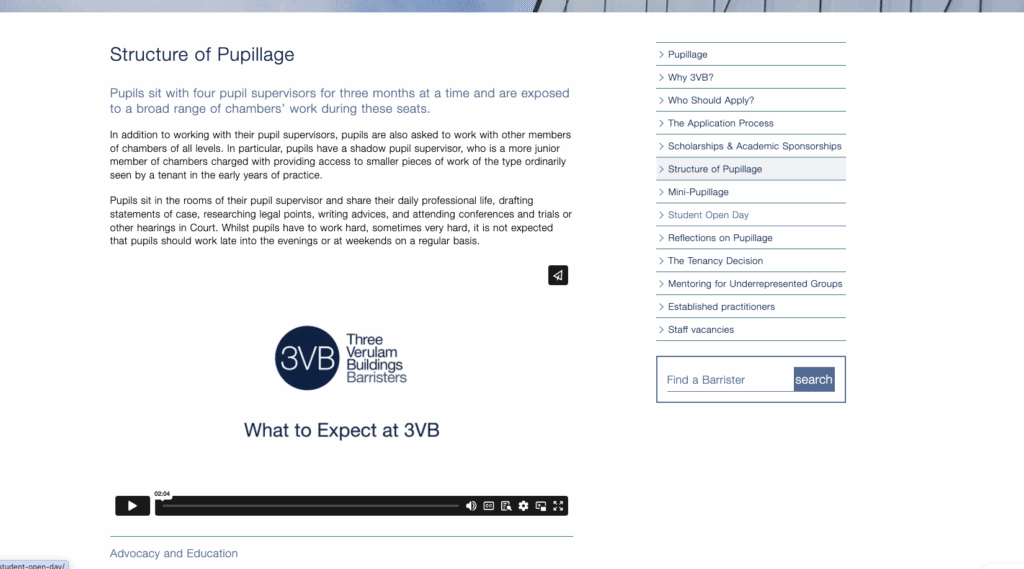
3 Verulam Buildings’ pupillage page offers clear, detailed information about their recruitment process and programme. It highlights the chambers’ focus on intellectual ability, advocacy skills and determination as well as their supportive environment to help pupils excel during pupillage.
4 Pump Court
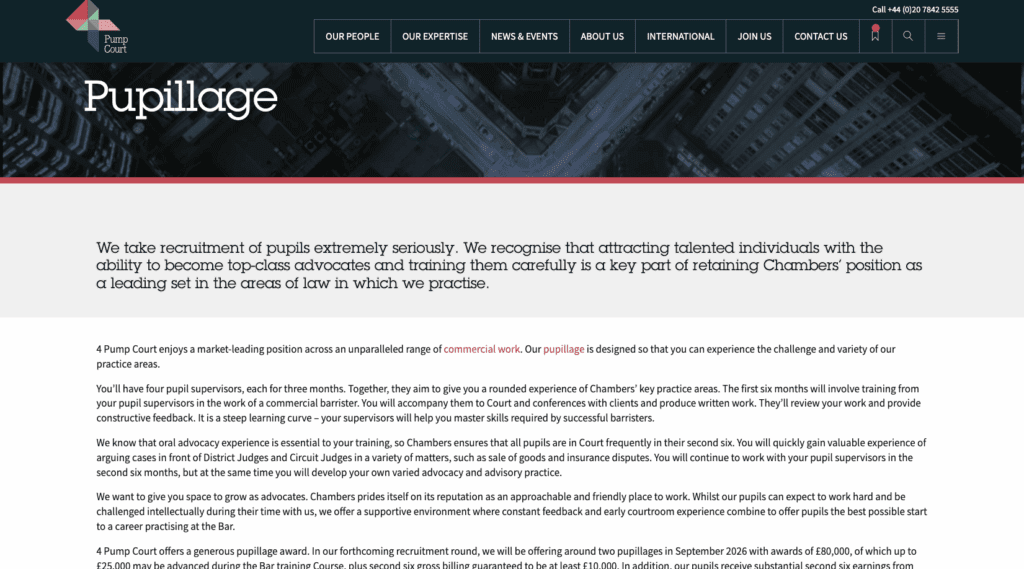
4 Pump Court’s pupillage page is well-organised and easy to navigate, with clear sections outlining the application process, pupillage structure, funding and tenancy prospects. The information is presented in concise paragraphs with headings that guide users through key topics. Links to mini-pupillage details and application forms are readily accessible, making it user-friendly for prospective applicants seeking specific information.
4 Stone Buildings
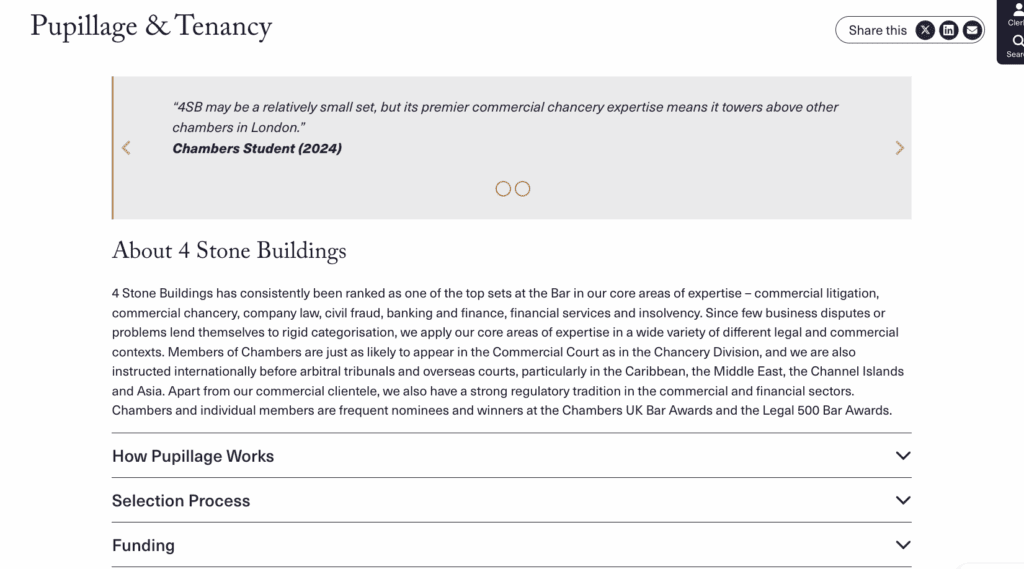
4 Stone Buildings’ pupillage page is well-organised and easy to navigate, with clear sections covering the pupillage structure, application process and equality and diversity. It includes links to additional resources and contact details, ensuring applicants can easily find relevant information.
7KBW
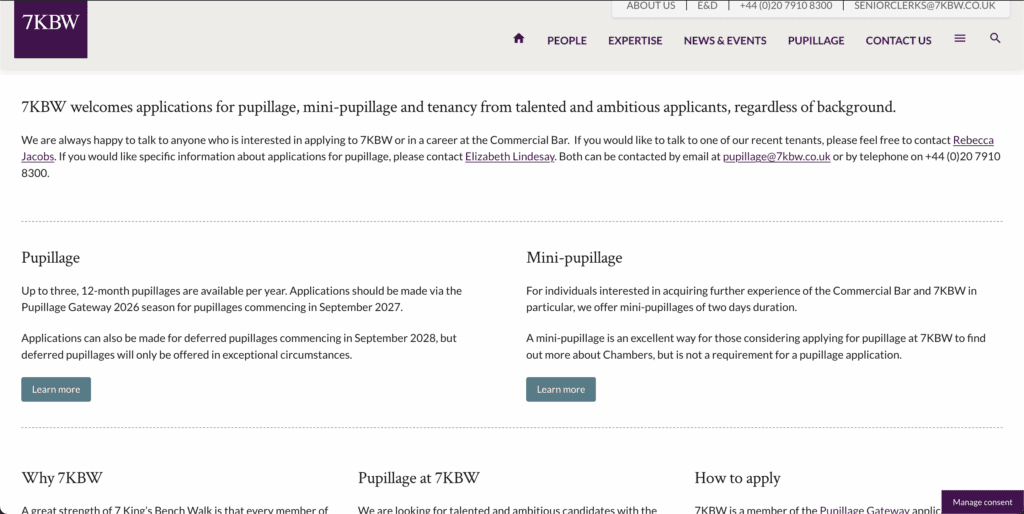
7 King’s Bench Walk’s pupillage page is clearly organised with sections on the pupillage structure, application process and equality and diversity. It includes useful links, contact details and video content, making it easy for applicants to find relevant information.
Brick Court Chambers
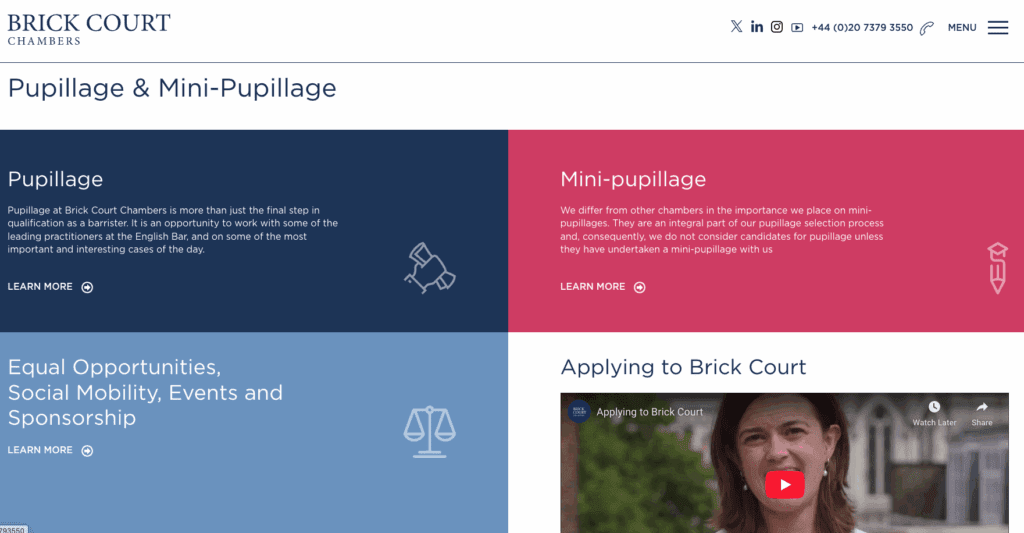
Brick Court Chambers’ pupillage page is neatly laid out, breaking down key information into distinct sections such as the pupillage structure, application steps and commitment to equality and diversity. The page also provides helpful links and contacts, making it straightforward for applicants to access what they need.
Erskine Chambers
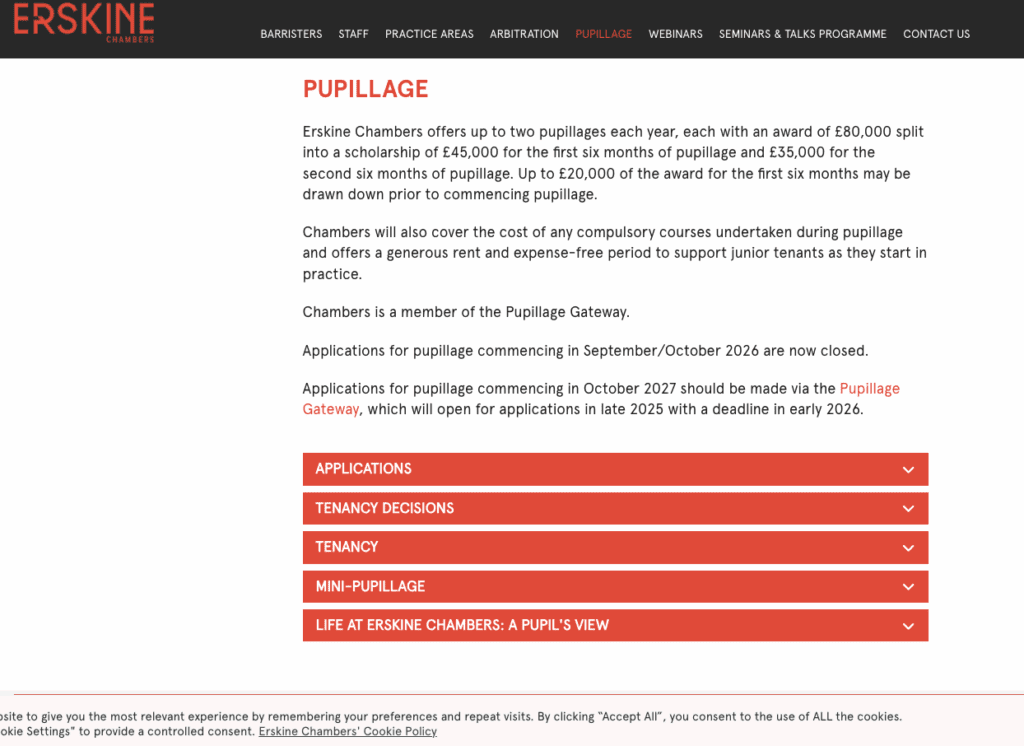
Erskine Chambers’ pupillage page is structured with clarity and ease of navigation, incorporating accordion-style dropdowns to neatly organise detailed information. This format allows applicants to access specific sections such as funding details, application procedures and tenancy expectations without overwhelming the page layout. The use of accordions enhances user experience by keeping the content concise and well-structured, facilitating quick access to relevant information. Additionally, the page includes links to the Pupillage Gateway and contact details for further inquiries.
Essex Court Chambers
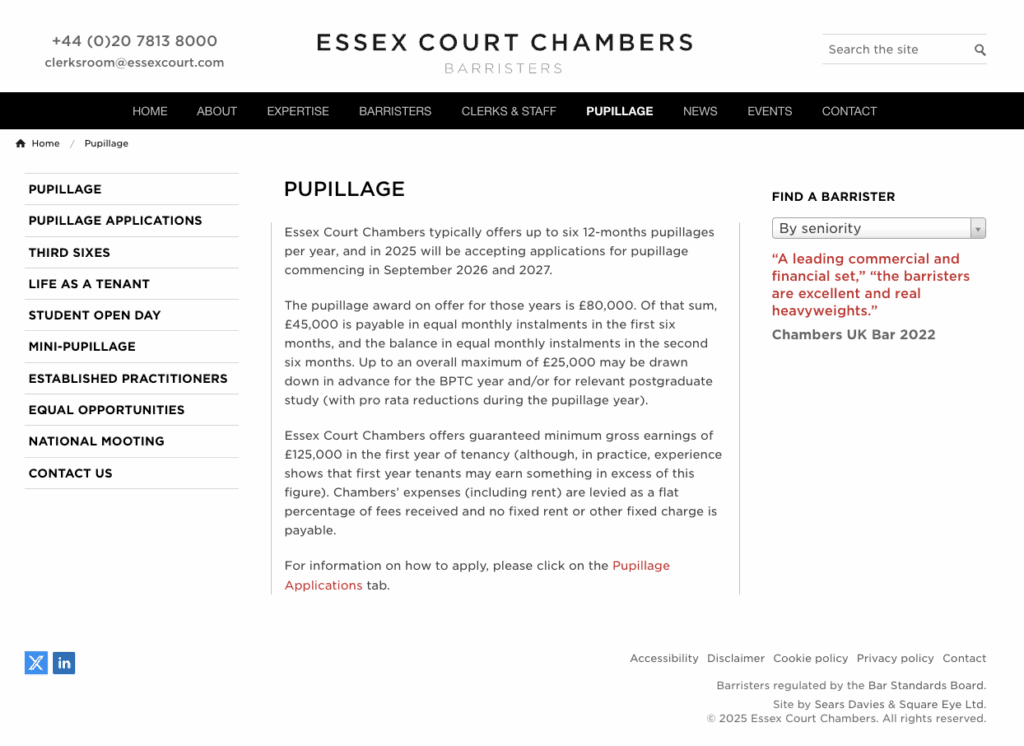
Essex Court Chambers’ pupillage page is structured for clarity and accessibility, featuring a clean layout with clearly labelled sections. It effectively uses headings and subheadings to organise content, allowing users to easily navigate through information on the pupillage structure, funding, application process and tenancy prospects. The straightforward design ensures that prospective applicants can quickly find relevant details without unnecessary complexity.
Hailsham Chambers
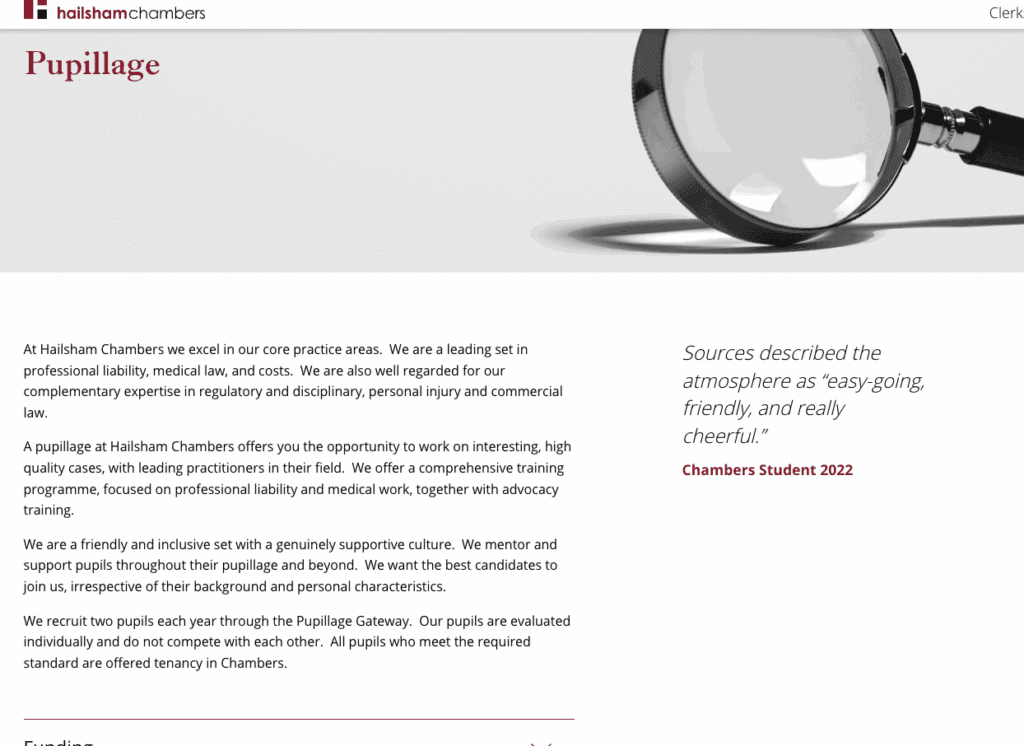
Hailsham Chambers’ pupillage page is well-organised, featuring clear accordion-style dropdowns that neatly categorise detailed information. This structure allows prospective applicants to easily navigate sections on funding, application procedures, selection criteria and equality and diversity. Additionally, the page includes a testimonial from a former pupil, providing personal insight into the pupillage experience. The use of accordions enhances user experience by keeping the content concise and well-structured, facilitating quick access to relevant information.
New Square Chambers
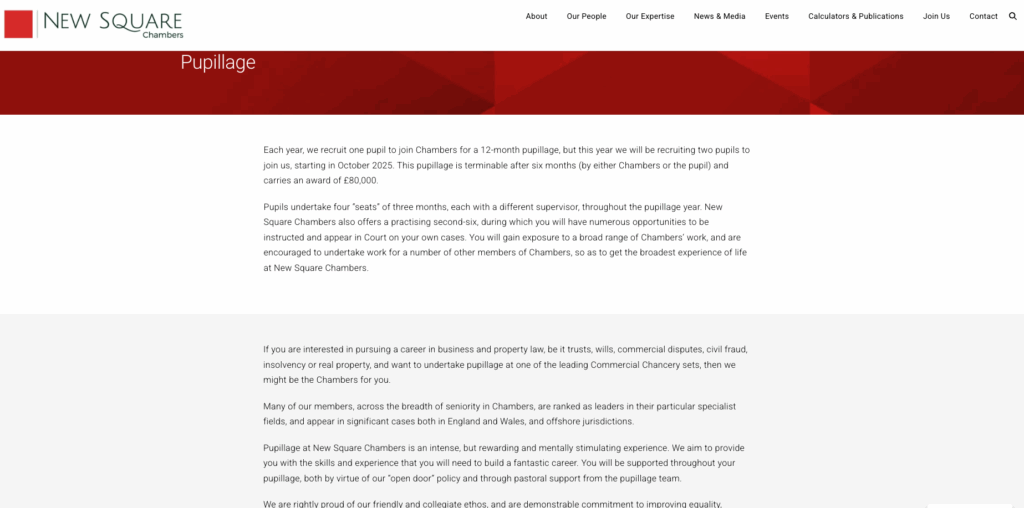
New Square Chambers’ pupillage page is clearly structured, featuring distinct sections that outline the pupillage programme, application process, selection criteria and diversity initiatives. The page is divided into well-defined headings, allowing prospective applicants to easily navigate and access relevant information. It also includes downloadable documents, ensuring applicants have easy access to key materials. This organised layout helps make all important details readily available to potential applicants.
Outer Temple Chambers
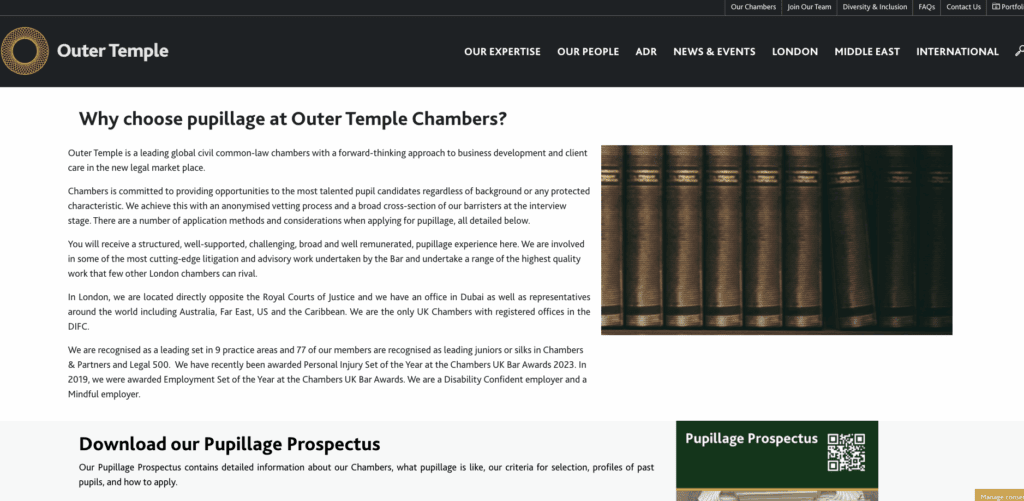
Outer Temple Chambers’ pupillage vacancies page is well-organised, with clear sections and useful downloadable documents like the Pupillage Prospectus. It also features engaging video content, providing dynamic insights into life at the chambers and making key information easy to access.
Radcliffe Chambers
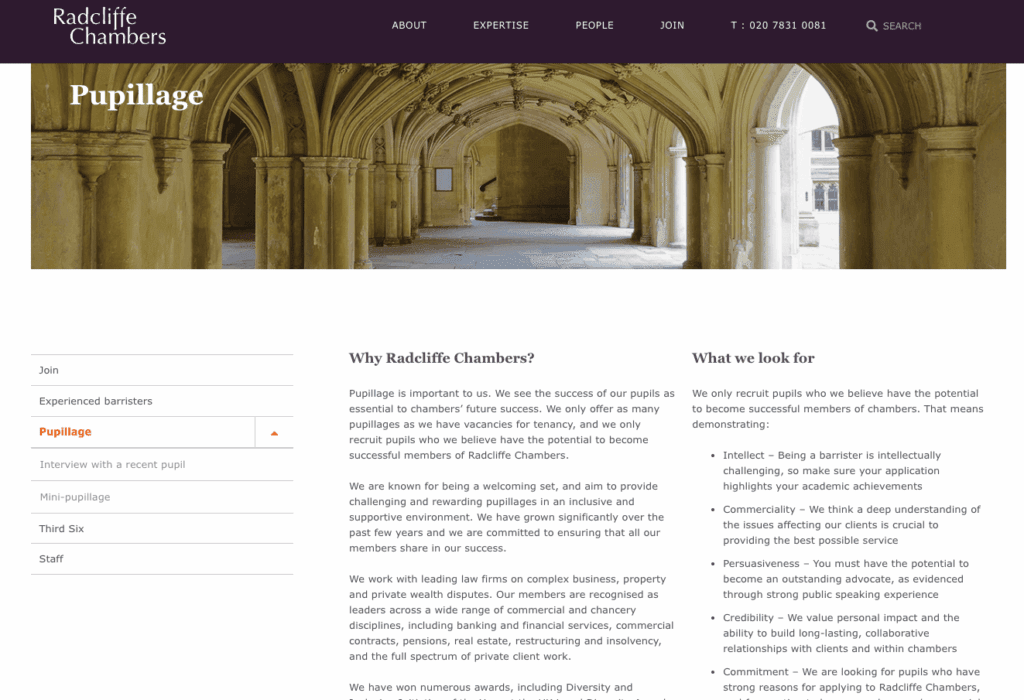
Radcliffe Chambers’ pupillage page is clearly laid out with distinct sections covering the pupillage structure, application process and diversity. It includes links to video content and external articles, offering applicants additional insights and resources. The straightforward structure makes it easy for prospective pupils to find relevant information.
South Square
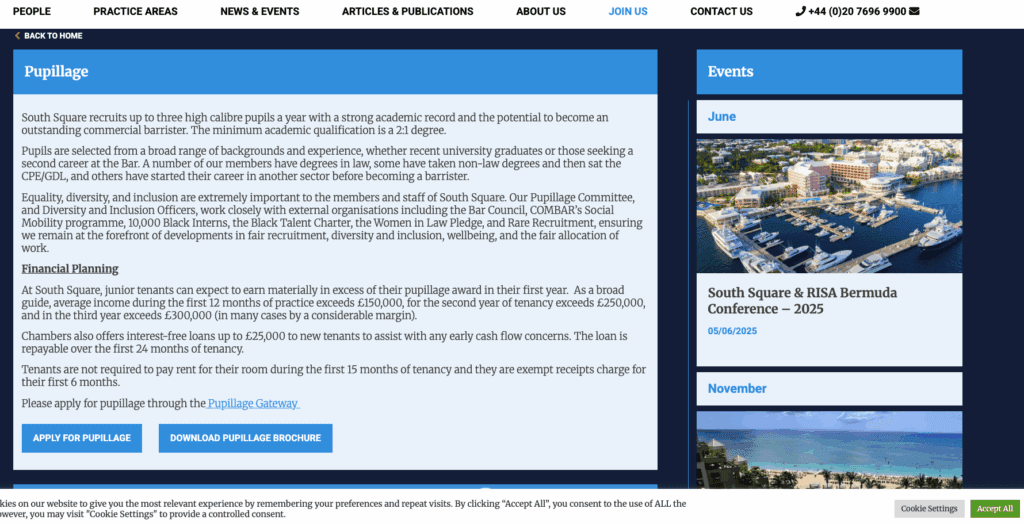
South Square Chambers’ pupillage page is thoughtfully structured to provide prospective applicants with comprehensive and accessible information. The layout is clean and well-organised, with clearly defined sections covering the pupillage structure, application procedures and selection criteria. The page also features an events panel, highlighting upcoming opportunities and engagement activities. This user-friendly design ensures all relevant information is readily available, making navigation straightforward for potential applicants.
Tanfield Chambers
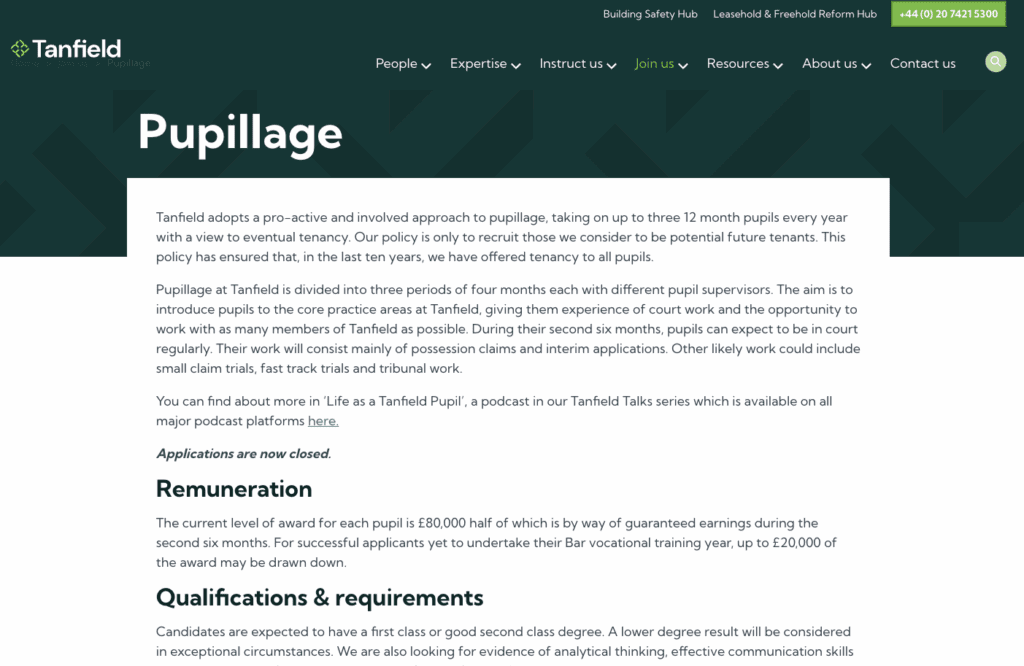
Tanfield Chambers’ pupillage page is well-structured and informative, offering prospective applicants clear insights into the pupillage experience. The page is divided into distinct sections, including an overview of the pupillage structure, remuneration details and qualifications and requirements. It also includes PDF downloads, providing easy access to important documents. This combination of structured content and downloadable resources ensures that applicants have comprehensive information to support their application.
Twenty Essex
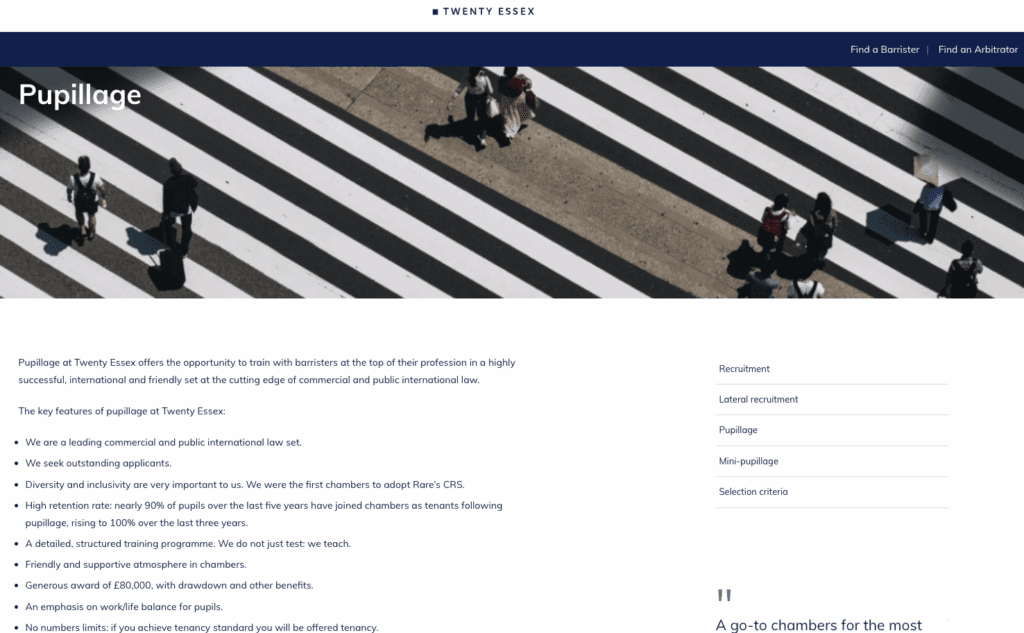
Twenty Essex’s pupillage page is well-structured and user-friendly, featuring clear accordion-style dropdowns that neatly categorise detailed information. This format allows prospective applicants to access specific sections such as funding details, application procedures and tenancy expectations without overwhelming the page layout. The straightforward design ensures all relevant information is readily available, facilitating smooth navigation. The page also includes a link to an article titled “See our top tips on commercial pupillage applications,” offering additional guidance for applicants.
One Essex Court
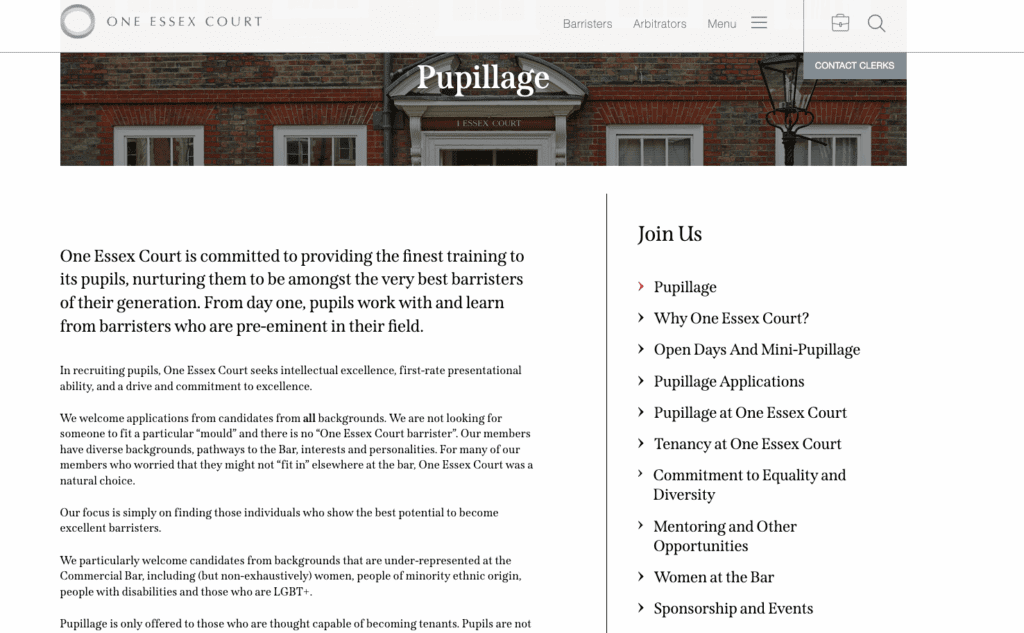
One Essex Court’s pupillage page is well-organised with clear sections covering the pupillage process, structure and application details. It features accordion-style dropdowns for easy navigation, a dedicated FAQ section and multiple subpages. The page also highlights the chambers’ accreditations and awards, providing a comprehensive and user-friendly resource for applicants.
Keystone Law

Keystone Law does not have a dedicated pupillage page. Their recruitment info is grouped under a general “Join Us” section focused mainly on solicitors and legal professionals. It lacks specific details on pupillage or the application process, so prospective pupils may need to contact the firm directly for more information.
Old Square Chambers
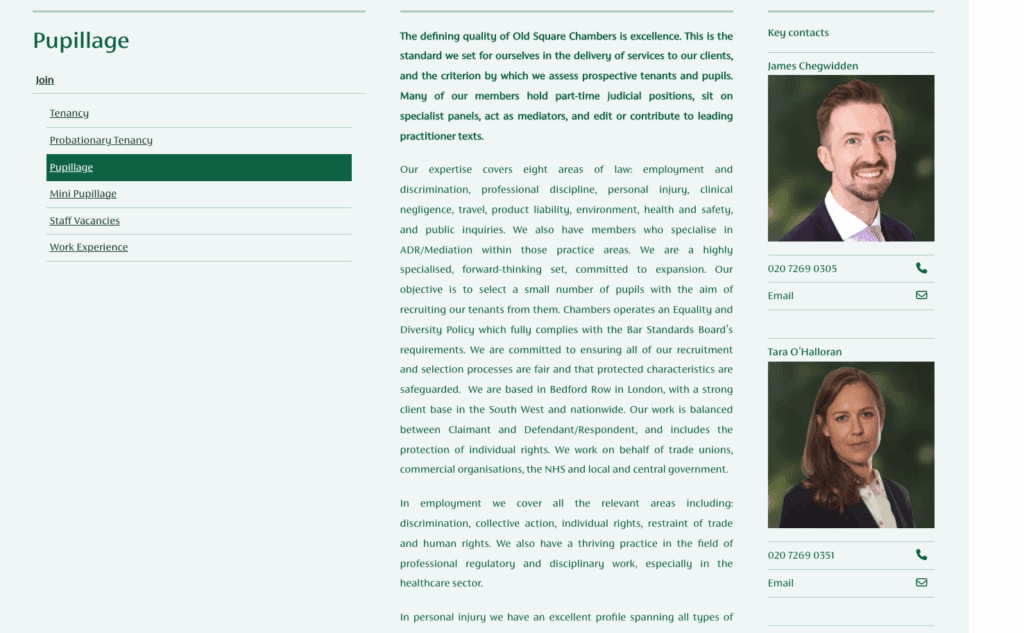
Old Square Chambers’ pupillage page is clear and straightforward, with key sections on the pupillage structure, funding, application process and selection criteria. It uses accordion dropdowns for easy navigation and includes contact details for key personnel, making it simple for applicants to get in touch.
Doughty Street Chambers
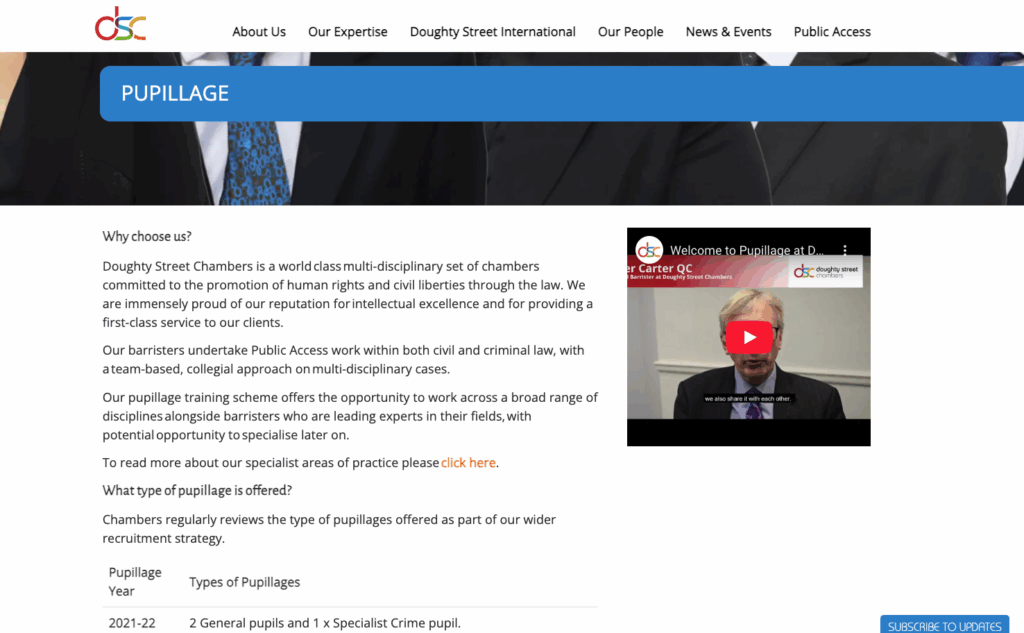
Doughty Street Chambers’ pupillage page is well-organised and informative, offering a clear overview of their 12-month pupillage structure, application process and commitment to diversity and inclusion. The page details the types of pupillage available, specialisms and recruitment numbers and provides links to key documents and outreach programmes. It also features an embedded YouTube video and a newsletter sign-up, enhancing engagement and keeping prospective applicants informed.
Red Lion Chambers
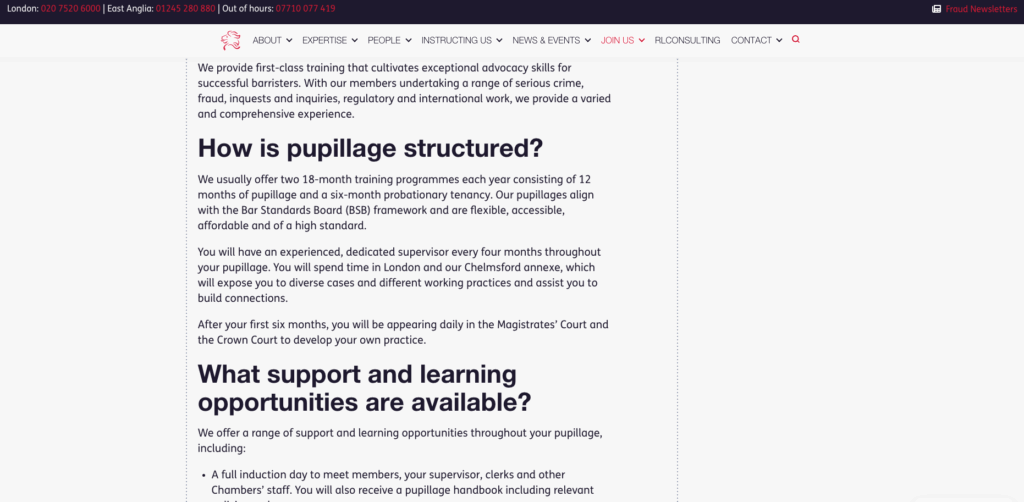
Red Lion Chambers’ pupillage page uses a clear FAQ format that directly answers common questions about the pupillage and application process. This style improves user experience and boosts SEO by incorporating relevant keywords, making the page both informative and easy to find online.
St Philips Chambers
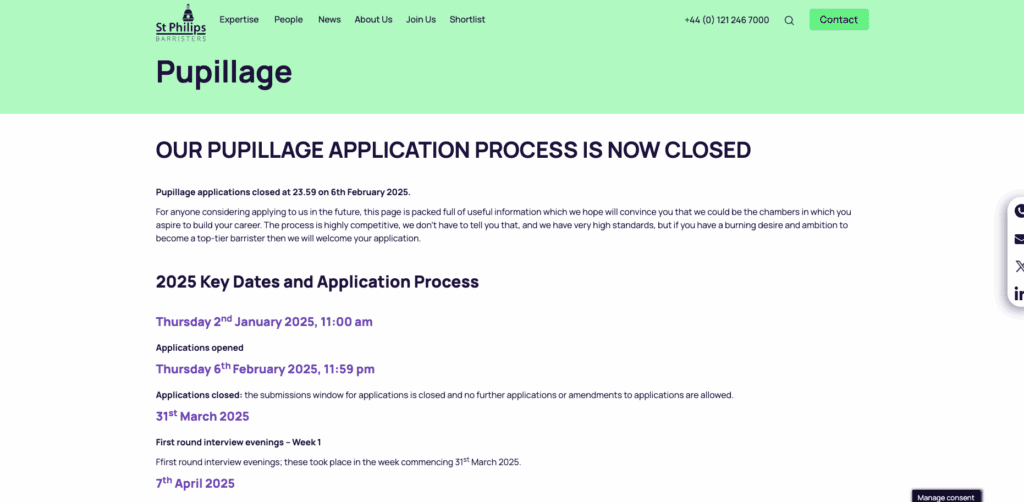
St Philips Chambers’ pupillage page is well-organised with clear sections on the pupillage process, application steps and selection criteria. It features accordion-style dropdowns for easy navigation, a FAQ section and key content highlights. The page also includes video content and downloadable brochures, providing helpful resources for applicants. Overall, the structure is user-friendly and ensures all essential information is easily accessible.
Garden Court Chambers
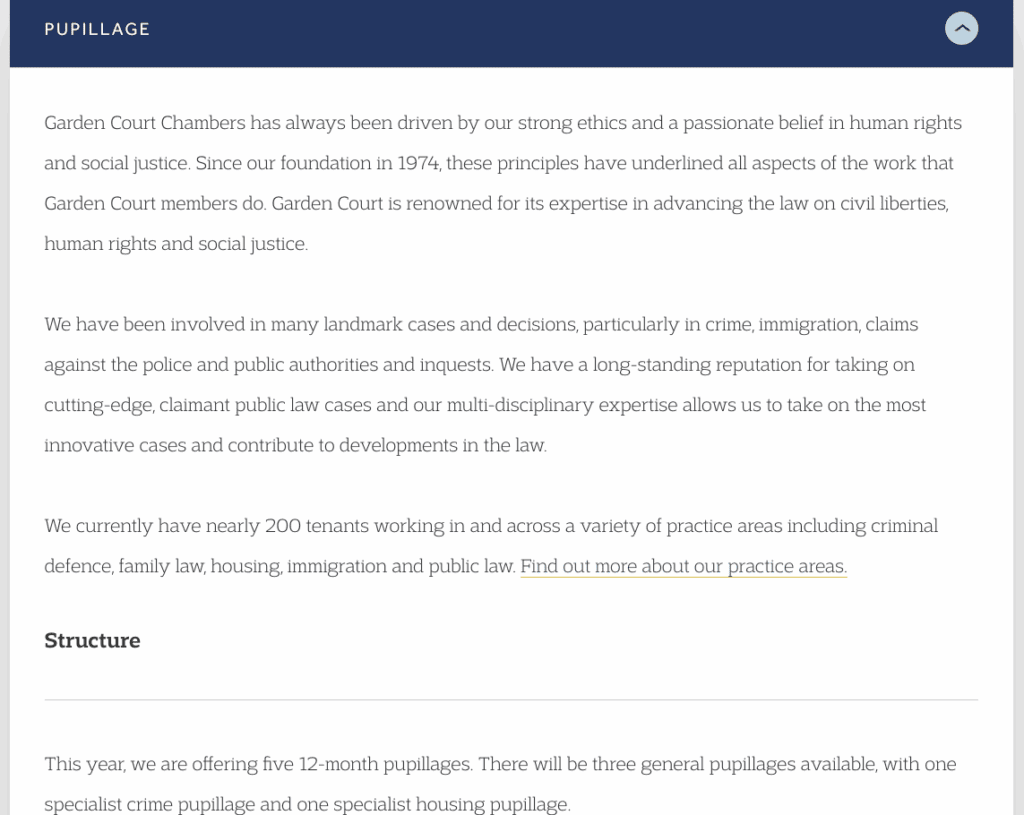
Garden Court Chambers does not have a dedicated pupillage page. Instead, the pupillage information is integrated into their general “Join Us” section. This section outlines the chambers’ commitment to human rights and social justice, providing an overview of the pupillage programme, application process and selection criteria.
Monckton Chambers
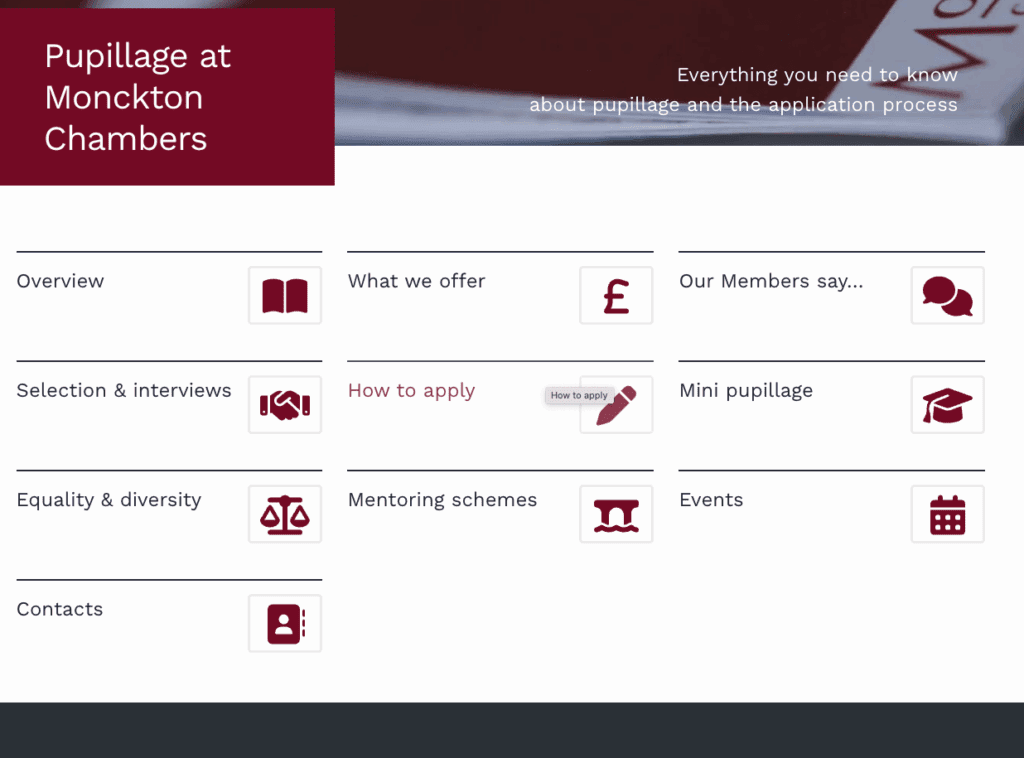
Monckton Chambers’ pupillage information is organised across a main landing page with links to subpages covering key topics like application process, mini pupillages and diversity. The overview page features a sidebar menu, making it easy to navigate between different sections. This clear structure helps applicants quickly find the information they need.
Cornerstone Barristers
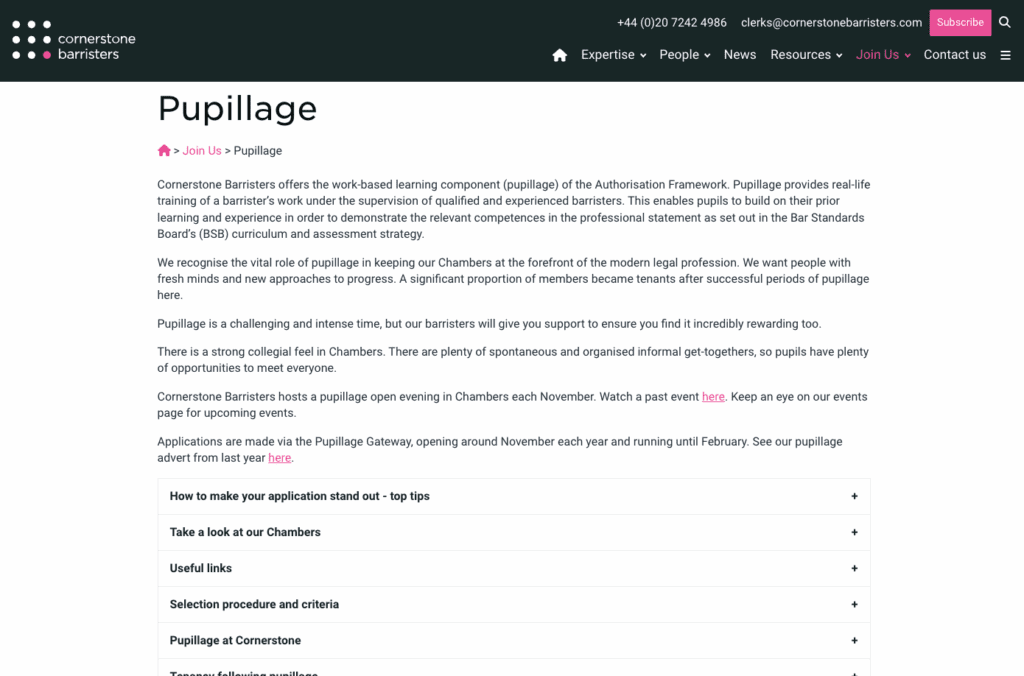
Cornerstone Barristers’ pupillage page provides a clear overview of the programme, application process and selection criteria. It includes links to useful resources like application tips and mini-pupillage information. The page features accordions for easy navigation and social media share buttons. It also highlights the chambers’ commitment to diversity and invites applicants to an annual open evening.